MUSIC
The Illusion of the Later
The neglect of impermanence describes the mistake of ignoring that life changes without warning. Trying to fight it is like trying to grasp water with your hands: the harder the pressure, the faster it escapes.

Art teaches that the beauty of life lies in fragility and in the fact that each moment is unique. When this basic reality is ignored, tragedy takes over the stage. Music is not merely entertainment, but a philosophical lens that translates the human condition.
Seurat’s mathematical obsession attempted to freeze time, while Delibes’ melodies warned of the danger of ignoring the clock. The setting shifts to cinema and R&B, but the soul’s exposed fracture remains the same.
The movie In Time, starring Amanda Seyfried and Justin Timberlake, treated time literally as currency, where life ceases the second the clock strikes zero. On the characters’ arms, the green digital stopwatch running in countdown exposes the urgency of impermanence. It is music dressed as cinema, showing that time is dissipating.
There is an aesthetic clash uniting the 19th century of Léo Delibes — and Georges Seurat — with contemporary R&B. In classical opera, the existential core exposes characters who fail in their attempts to freeze time or love. Life follows its implacable course, destroying illusions. This indolence toward ephemerality moves in the video for ‘Like You’ll Never See Me Again’, starring Alicia Keys \ @aliciakeys and actor Common, which simulates a cinematic atmosphere of drama, pursuit, and imminent tragedy.
The lyrics are the definitive manifesto against the illusion of the later: the chorus proposes touching, kissing, and loving ‘like it’s the last time’, because tomorrow is not guaranteed. The music video reinforces the message brutally, displaying the story backward starting from a tragic accident. It is the urgency of the now
The song to hold the one you love ‘like there would never be another reunion’ does not belong only to commercial R&B. The composition operates on the same tragic frequency as a nineteenth-century opera: human despair in the face of the certainty that everything slips through one’s hands.
Seurat’s pointillism, Delibes’ drama, Alicia’s piano, and #Ashanti’s samples are different frames for a single and true urgency: impermanence. Time does not negotiate. With the existential weight imprinted on the slow beats of 2000s R&B, Ashanti \ @ashanti translates the snap of silence: the instant when tomorrow becomes absence. All are A-Listers: A-licia, A-shanti, and A-aliyah, forming a triad of strong R&B women who sing of loss and ephemerality.
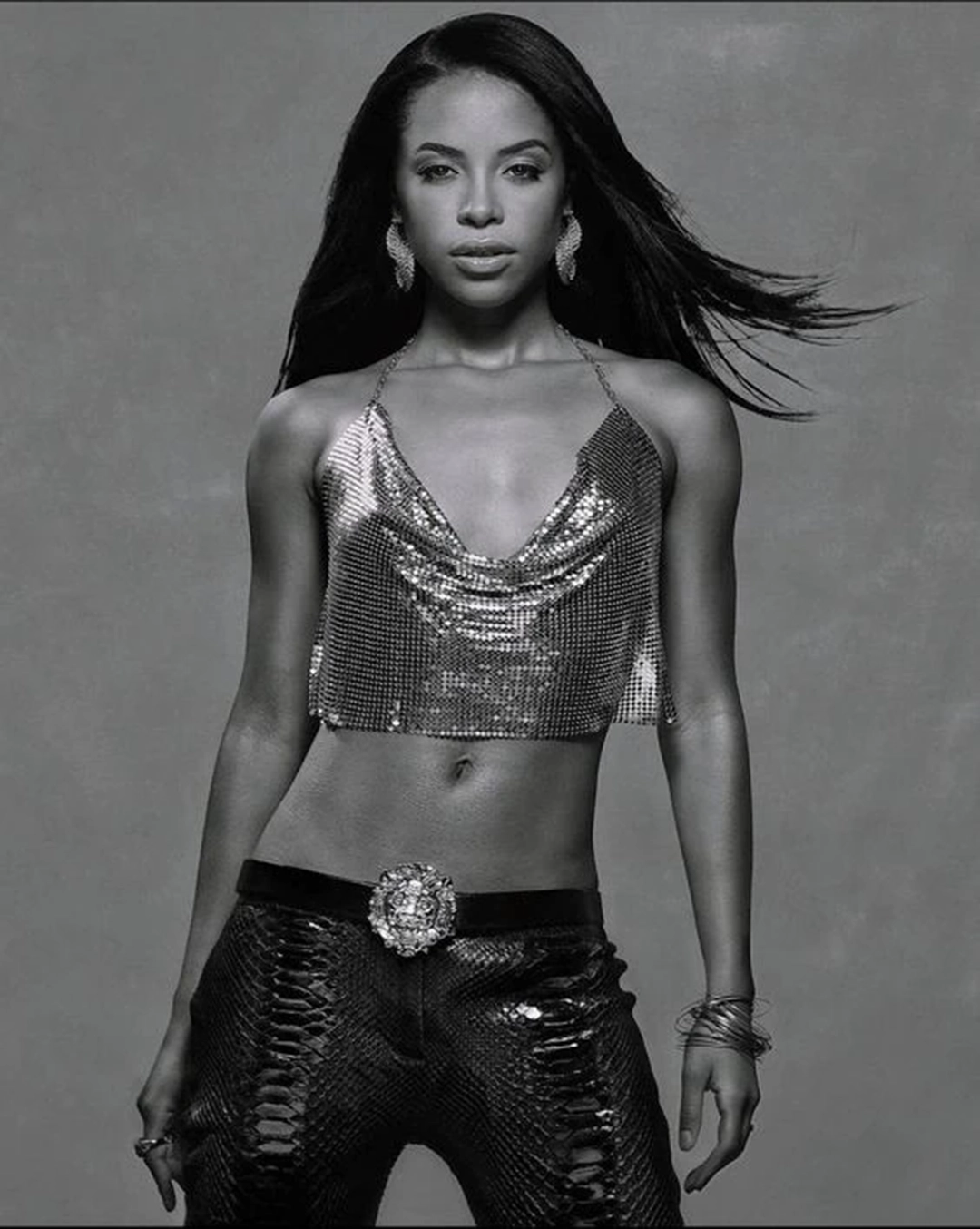
The eventual future that Aaliyah \ @aaliyah did not live—having died prematurely at age 22—ended up paved precisely by names like Alicia Keys in the following years, establishing a lineage of inheritance and finitude. The song ‘At Your Best (You Are Love)’—originally released on her 1994 debut album and re-recorded with an ethereal and timeless arrangement—features a floating interpretation, sustained by piano and a deep, melancholy bassline. The track’s very existence is a physical manifesto on how tomorrow is a tragic invention of the mind; the music carries this built-in mourning. The greatest tragic irony lies exactly in the recurring phrase: ‘a bright future ahead’. Projecting tomorrow as a mathematical certainty is an illusion that the premature interruption of Aaliyah’s life breaks with violence.
It is about the presence of the invisible: an artist whose biography proved exactly that fragility.


©2026 Rio de Janeiro, RJ